Six Things You Can Do To Get Involved in Global Health
By Todd Faubion - Faculty Director for Undergraduate Programs, Global Health
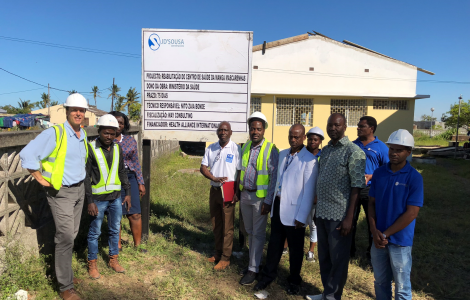
September 14th marked 6 months since Cyclone Idai made landfall on Mozambique’s central coast. In that time, Health Alliance International has worked to bring together multiple partners, including Mozambique’s National and Provincial Health Service to enact both emergency response and long-term resiliency building activities.
This year, the UW Department of Global Health (DGH) welcomes 65 new graduate students. These newest Huskies hail from 15 different countries (Afghanistan, Canada, China, Colombia, Indonesia, Kenya, Malawi, Mozambique, Nigeria, Peru, Rwanda, Sudan, Tunisia, Uganda, United States). They join the 139 continuing students already enrolled in Global Health MPH and PhD programs (68 MPH students, 45 PhD in Global health students, and 26 PhD in Pathobiology students).
The University of Washington Tuberculosis Research & Training Center (TRTC) held its fourth annual Tuberculosis Symposium on September 16, 2019. Over 100 researchers from UW, Seattle Children’s Research Institute, Stanford University, IHME, and others participated in the symposium. The Symposium, entitled “Innovations to help end the TB epidemic; a new vision for the 21st century,” featured sessions on TB vaccines, the risk of TB disease in children, and TB control interventions, and showcased innovations to help end the TB epidemic, both locally and globally.
The Global Health Immersion Program (GHIP) is the University of Washington’s flagship global health program for preclinical medical students. Since 2003, the program has sent students to developing countries to deepen their understanding of healthcare delivery abroad, the causes of illness, and the impacts on communities.
The University of Washington’s School of Pharmacy announced on Thursday, Sept. 12, a collaboration with global biopharmaceutical company UCB to improve access to care for people living with epilepsy. This interdisciplinary project will explore ways in which community pharmacists can better support people living with this neurological disorder.
The roughly 3.4 million people nationally and 75,000 people in Washington state who live with epilepsy often get fragmented and uncoordinated healthcare and community services.
Globally, 25 percent of new HIV cases occur among young women and adolescent girls in Africa. Pre-exposure prophylaxis, or PrEP, prevents infection when taken consistently, but stigma around the disease keeps some young women from maintaining usage, according to a new review by researchers at the University of Washington.
As part of the Ending the HIV Epidemic (EHE): A Plan for America initiative, the University of Washington/Fred Hutch Center for AIDS Research (CFAR) received $1.2 million to fund five research projects. This initiative allocates funding to HIV research with the goal of reducing new infections in the United States by 90 percent by 2030.
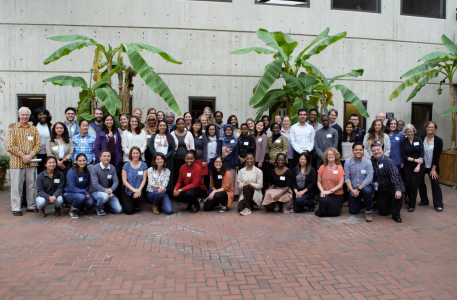
From Myanmar and Mozambique to the US and Egypt, 90 participants from 22 countries around the world traveled to Seattle August 26-30 for the University of Washington Department of Global Health intensive summer course in The Fundamentals of Implementation Science in Global Health. The one-week course taught participants systematic approaches that can be used to bring research findings to on-the-ground settings, with the ultimate aim of improving health for people around the world.
Gabrielle O’Malley, an Associate Professor of Global Health and Director of Implementation Science for the International Training and Education Center (I-TECH), received a $4,394,756 award to continue strengthening human resources for health in Malawi for HIV epidemic control and improved health outcomes of people living with HIV (PLHIV).