New HIV Researchers Get a Boost
The UW/FHCRC Center for AIDS Research (CFAR) Developmental Core is delighted to announce this year’s New Investigator Awards.
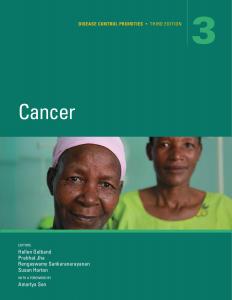
SEATTLE, Washington – The latest Disease Control Priorities 3rd Edition (DCP3) volume on cancer, available today, gathers essential information on effectiveness, cost-effectiveness, feasibility and affordability of a range of interventions to provide evidence-based guidance to decision makers worldwide. It is available online now at www.dcp-3.org/cancer and through the World Bank’s Open Knowledge Repository.
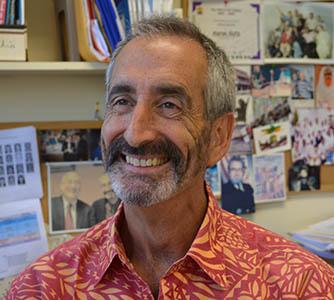
Faculty member Aaron Katz's passion is researching health care markets, policy and outcomes. "Do people get the care they need at the time they need it for an affordable price?" he asks in the latest SPH Close Up. Katz is an Adjunct Principal Lecturer of Global Health in addition to his appointment as Principle Lecturer of Health Services.
By Indra Ekmanis and Sara Stubbs, Cross-posted from the UW Office of Global Affairs
By Nancy Joseph
When Matthew Novak set foot on Tinjil Island in Indonesia this summer, it was a homecoming of sorts. Twenty years ago, Novak (BS, PhD, Psychology, 1993, 2002) participated in a month-long field study program on the remote island as a UW graduate student. He returned this year as a professor, along with four of his Central Oregon Community College students.
By Kate Pfizenmaier, SCOPE Program Manager
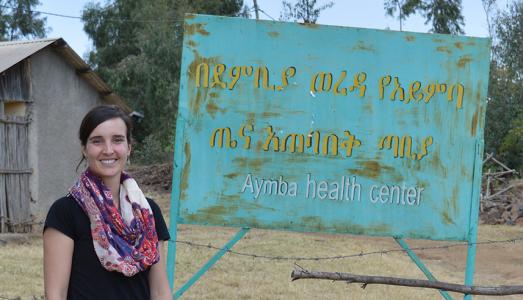
Strengthening Care Opportunities through Partnership in Ethiopia (SCOPE), a program in the Department of Global Health, empowers religious leaders to be health advocates in their communities. One way SCOPE does this is by encouraging Ethiopian priests to educate people at holy water sites on the importance of HIV testing, counseling, and treatment.
Washington-based global health initiatives have an enormous impact on health worldwide and economic impact in Washington State. A new report from the Washington Global Health Alliance combines new and existing data to measure and quantify this economic significance of global health to Washington State including employment figures and fiscal impacts. The findings are striking, revealing a thriving sector rich in collaboration, and uniquely positioned to address health equity around the world.
The 2014 annual report provides a snapshot of a very busy year including:
Innovation: Our innovative faculty, students, and staff are solving global health problems with immense curiosity, creativity and effectiveness. Most of the research developments are made possible by strong partnerships with local experts and organizations, some of whom we have worked with for over 20 years.
Adjunct Professor Lisa Manhart has devoted much of the last five years of her life to launching a new model of student learning and engagement at the University, mentoring students in strategic analysis, and building a top-notch research and training organization.